
Walk into a yoga class today and you might expect to hear the usual sounds: quiet breathing, the occasional instruction from the teacher, perhaps some soft music in the background.
But increasingly, there is another sound making its way into yoga studios: the handpan.
At first, it might seem like an unusual combination. Yoga is traditionally associated with stillness, breath and meditation, while the handpan is a relatively modern musical instrument.
Yet the two fit together surprisingly well.
Yoga teachers are discovering that the handpan can do something that background music often cannot: create an atmosphere that people actively listen to without pulling them out of their practice.
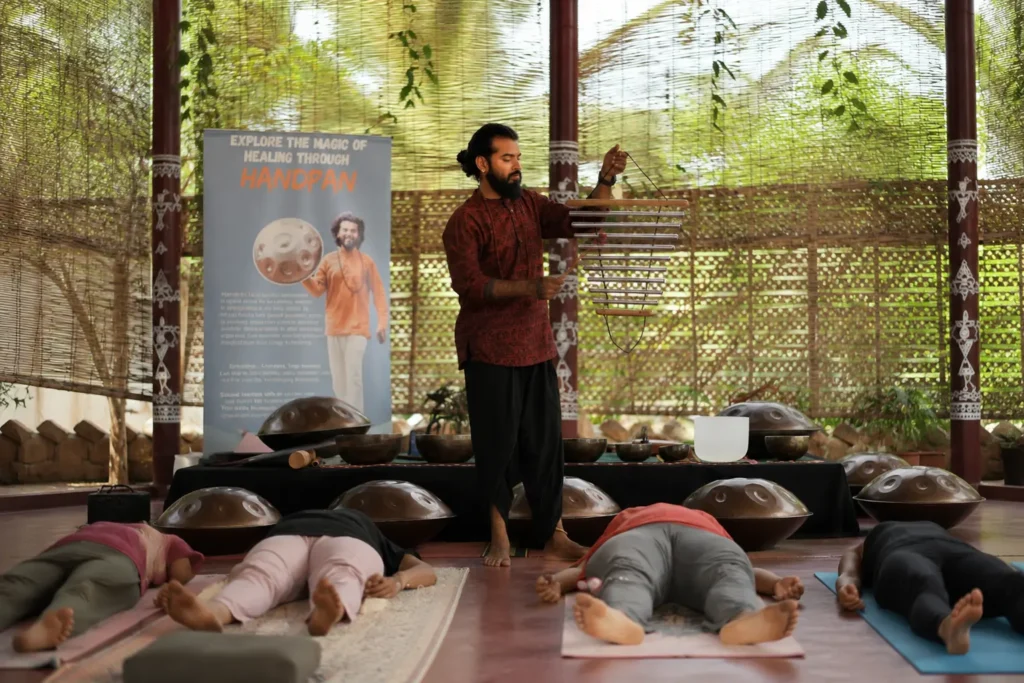
The Sound becomes a Part of the Practice
A typical yoga class has moments of movement and moments of stillness.
During asanas, students are focused on their bodies. During pranayama, they are focused on their breath. And toward the end of class, during meditation or savasana, the goal is often to gradually turn their attention inward.
This is where using a handpan for yoga can be particularly effective.
Its notes are spacious, resonant and naturally sustained. A single note can continue ringing for several seconds, creating a gentle soundscape without requiring a complicated musical arrangement.
Rather than telling the mind what to feel, the instrument gives it something simple to listen to.
That can make the transition from physical movement to stillness feel much more natural.
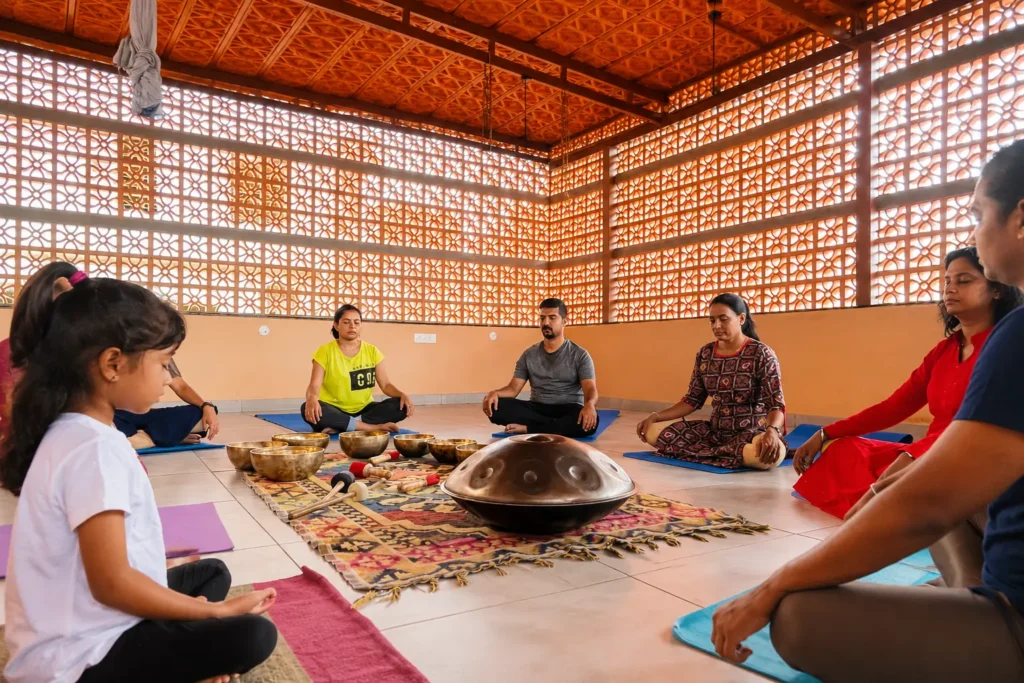
Why live meditation music works
Meditation can be surprisingly difficult for beginners.
When the room becomes quiet, the mind doesn’t necessarily become quiet with it. Thoughts about work, family, dinner and tomorrow’s schedule can suddenly become very noticeable.
A gentle sound can provide an anchor.
The sustained notes of a handpan give the mind something to return to without demanding constant attention. You can listen to a note, notice it fade, and then notice the next one.
There is no melody that you have to follow.
No lyrics to interpret.
No beat that you need to keep up with.
Just sound, resonance and silence between the notes.
For some practitioners, that makes the transition into meditation easier.
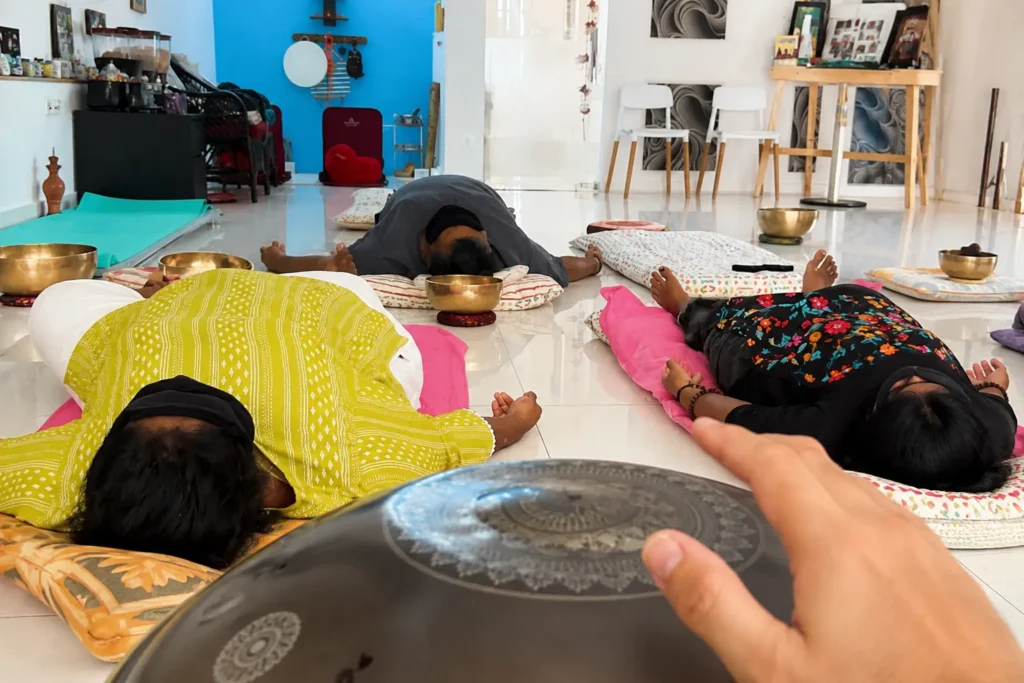
It doesn't overpower the Teacher
One of the biggest advantages of a handpan in a yoga class is its acoustic character.
Yoga teachers generally don’t want an instrument competing with their instructions. The music needs to support the class rather than become the centre of attention.
A handpan can work beautifully in this setting because it can be played with considerable dynamic control.
A teacher can use a few quiet notes during a breathing exercise, allow the instrument to become more present during savasana, and then let it disappear completely when verbal instruction is needed.
The result is less like having a musician perform at the class and more like incorporating another layer into the environment.
From Movement to Stillness
One particularly interesting use of handpan is during the transition into savasana.
The first part of a yoga class can be physically demanding. Students may have spent 45 minutes or more stretching, balancing, strengthening and coordinating their movements with their breath.
Then suddenly, they are asked to lie down and do nothing.
That transition isn’t always easy.
A handpan can act as a bridge.
The playing can gradually become slower and quieter as the physical intensity of the class decreases. The sound gives students something to follow while their breathing slows and their attention moves away from physical effort.
By the time the final notes fade, the room can already feel completely different from the one in which the class began.
Why Teachers are choosing it over ordinary background music
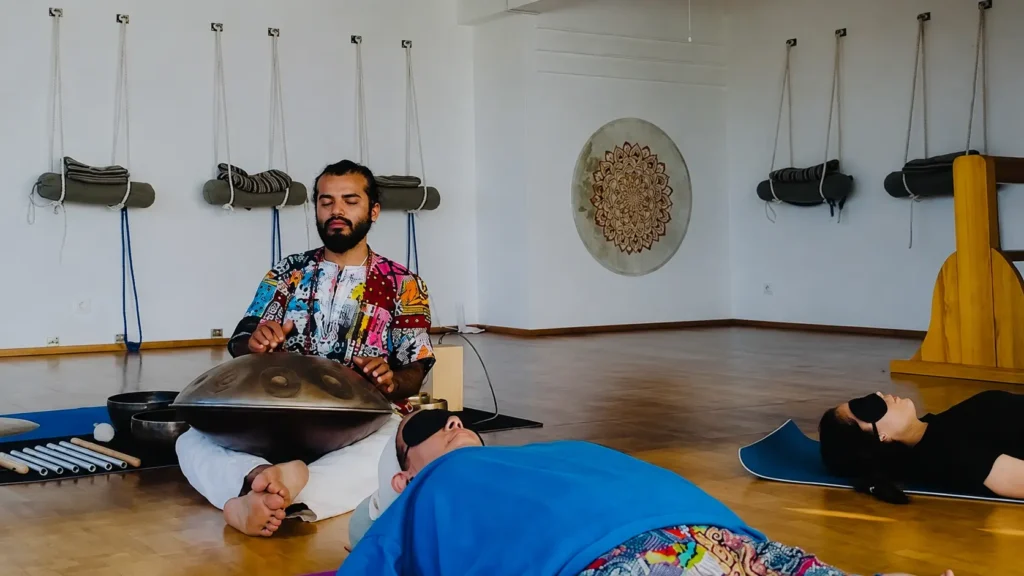
Using recorded yoga music has been established as a practice with the advent of digital music platforms. But recorded music has a fixed structure. It has a predetermined tempo, volume and progression.
A live handpan is different.
The teacher can respond to the room.
If the class needs more quiet, the playing can become quieter. If the teacher is using music for meditation and the students are entering a longer meditation phase, the teacher can leave more space between notes. If the energy of the room changes, the music can change with it.
There is also something inherently different about hearing an acoustic instrument being played a few metres away.
You don’t just hear the sound.
You hear the physical instrument resonating in the room.
That creates a sense of presence that a recording often cannot reproduce.
Handpan and Sound Healing
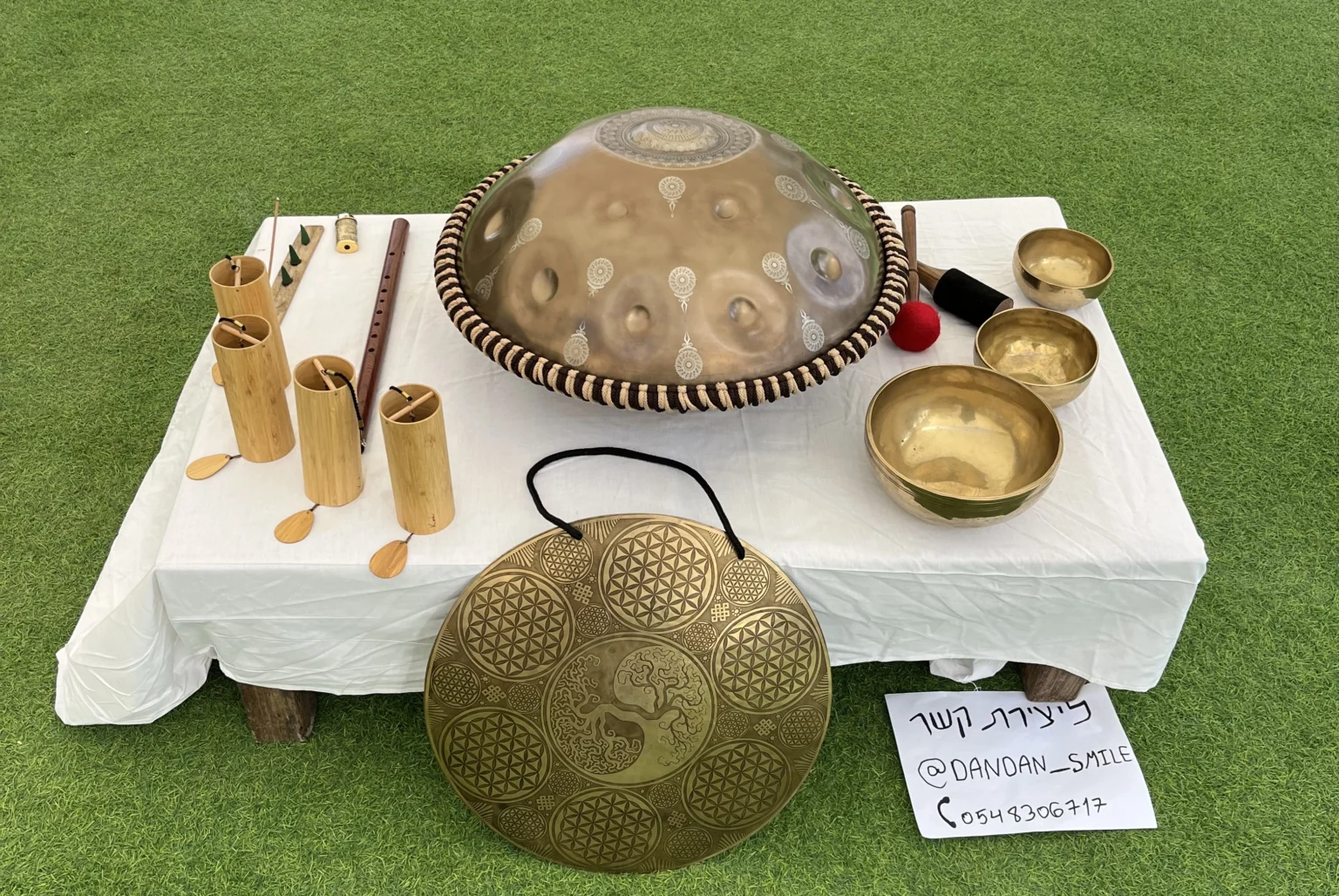
The growing popularity of handpan for yoga also overlaps with the broader interest in sound-based wellness practices.
Sound baths, meditation sessions and other forms of sound-based relaxation have become increasingly common in wellness spaces.
Using a handpan for yoga feels natural because it produces a rich, sustained sound without requiring a large setup.
It can be used alongside singing bowls, gongs and other instruments—or on its own.
But it is worth making an important distinction.
A handpan is a musical instrument. While people may find its sound deeply relaxing or meditative, claims that particular notes or frequencies can medically treat specific conditions should be approached carefully.
Its most immediate benefit is much simpler: It gives people a beautiful sound to listen to.
It makes yoga feel less like a workout
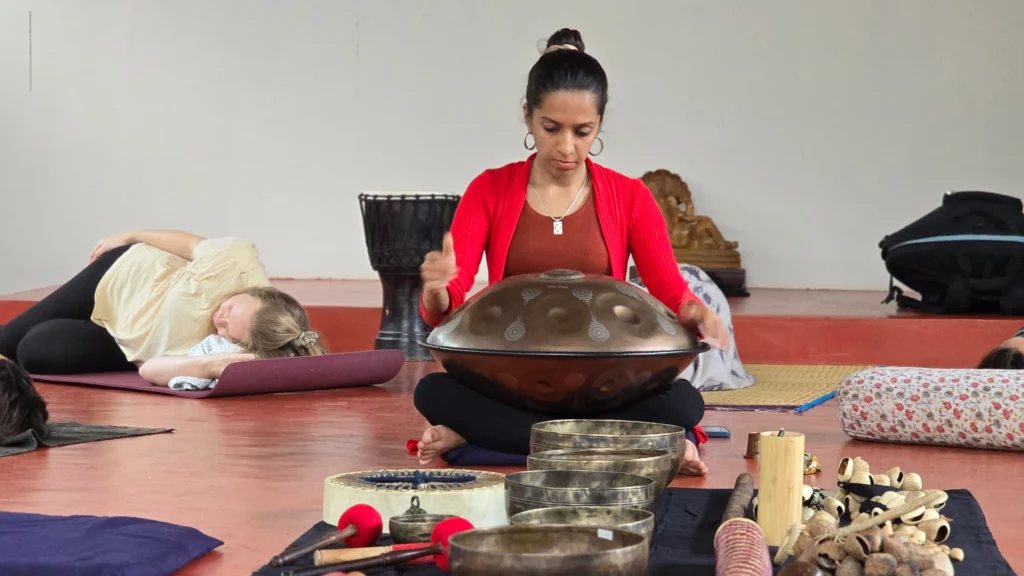
Modern yoga can sometimes become heavily focused on the physical side of the practice.
Strength – Flexibility – Balance – Mobility – Repeat
But yoga has always contained a contemplative dimension as well.
The handpan naturally draws attention toward that quieter side of the practice.
Its presence can remind students that the class isn’t simply a sequence of physical exercises. There is also an opportunity to slow down, listen and become more aware of the present moment.
For teachers trying to create a more immersive experience, that can be valuable.
You don't need to be a musician
Another reason handpan is finding its way into wellness spaces is its accessibility.
You don’t need to know how to play complicated chords to create something pleasant on a handpan.
Many handpans are designed around a particular musical scale, meaning that the notes are selected to work harmoniously with one another.
This makes it possible for someone with relatively little musical experience to explore the instrument and create simple, atmospheric music.
For a yoga teacher, that can be particularly appealing.
The goal isn’t necessarily to become a concert performer.
It is to create an environment in which people can relax, breathe and listen.
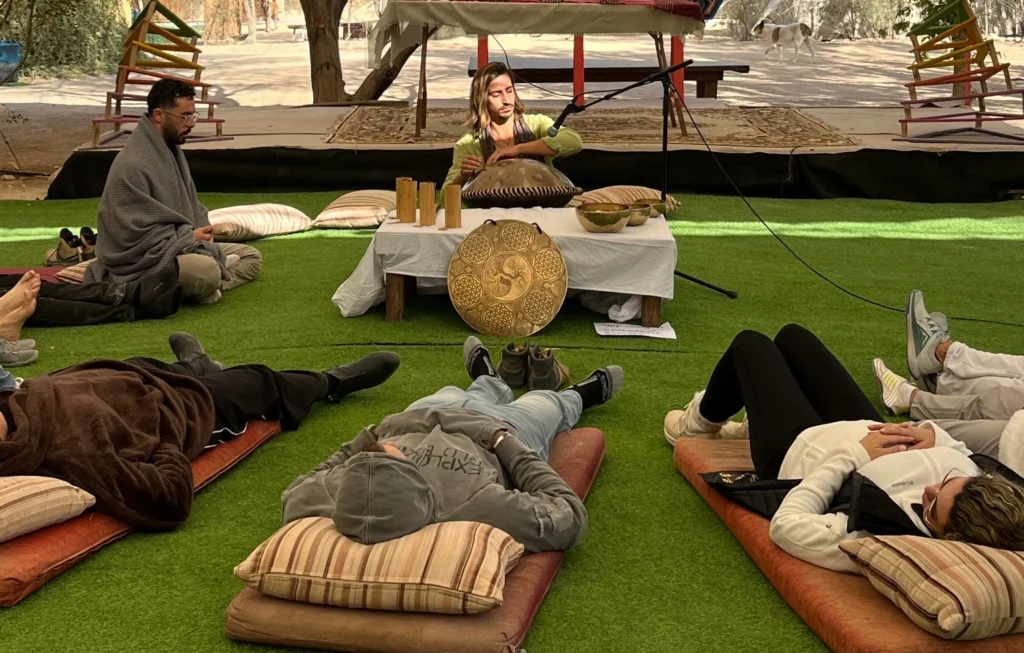
Thinking of bringing a handpan into your yoga practice?
You don’t need a huge studio or a complicated sound system.
A single handpan, a quiet room and someone willing to explore its sound can be enough to create a completely different atmosphere.
And perhaps that’s why more yoga teachers are reaching for the instrument.
Not because yoga needs more music.
But because sometimes, the right sound can help us become a little more present. Talk to Us to help pick the right handpan for you.