
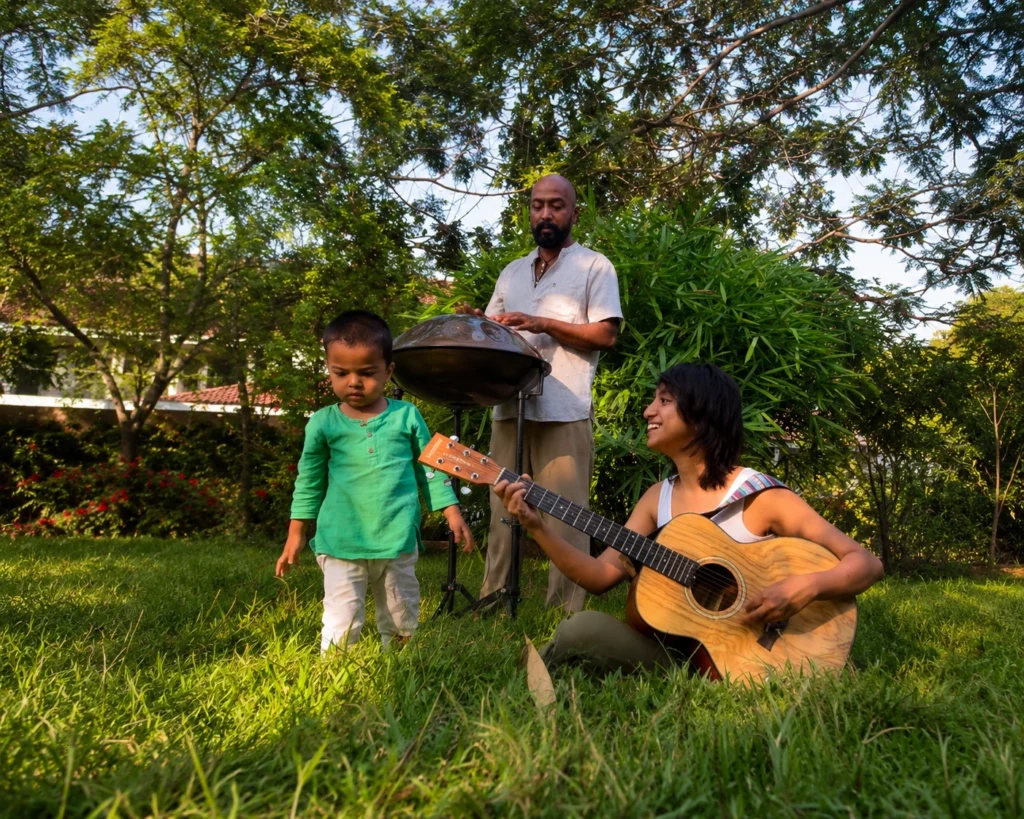
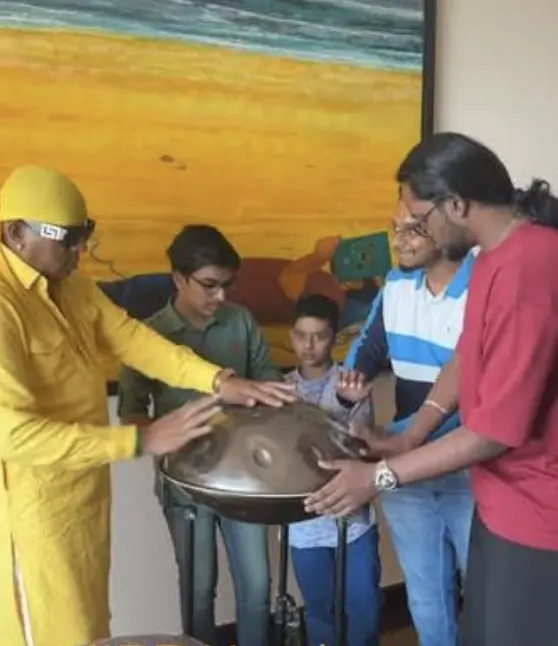
I have noticed something interesting whenever a parent or a couple come to our workshop looking for a handpan. When they are accompanied by a child, quite often, the parent is the one who has come to buy it, but the child is the one whose eyes light up first.
They see the handpan, sit down, and start playing. No instruction. No sheet music. No, “First let me teach you how to hold your hand.”
They just start tapping it. Within a few minutes, something even more interesting happens. The child starts figuring it out. Often, faster than the parent. Sometimes, the child ends up correcting the parent.
I have seen this enough times now that I have stopped being surprised by it.
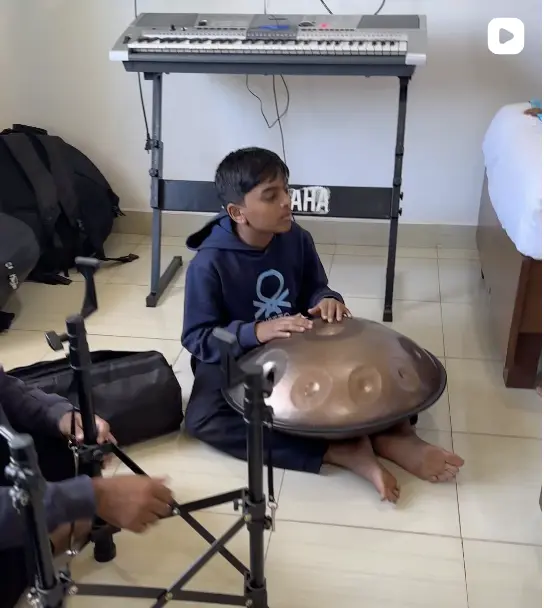
"To a child, the handpan doesn't feel like practice. It feels like play."
Children Just Start Playing
Give a child a keyboard and there are an enormous number of things they can do.
That is also the problem. There are 88 keys. There are scales, chords, fingering patterns and eventually sheet music. A hundred questions before they have struck their first note. Then there’s the banging – press the keys hard, press them all together and what are all the buttons for? Or my eldest son’s favourite – hold down the DJ button and voila, the keyboard becomes his accessible tune player.
Give a child a guitar and there is another kind of learning curve. Their fingers have to learn where to go, how much pressure to apply and how to make a clean sound.
These are wonderful instruments. Their setback is however that they ask the child to learn a lot before they can really express what they are hearing in their head.
A handpan is much more responsive. You hit a note. It responds. You hit it harder. It responds differently.
The child doesn’t need to understand dynamics to discover them. They simply realise: “Oh. If I do this, it sounds like that.” That is usually enough to keep them going.
A Handpan responds to Children
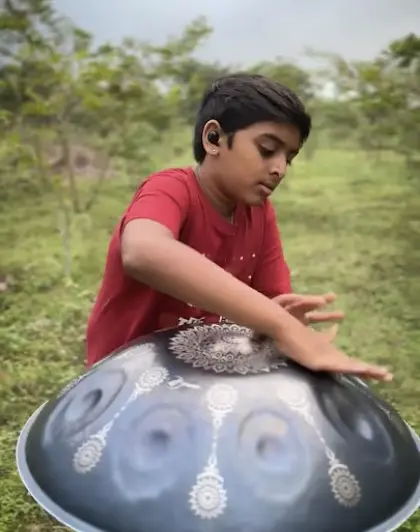
"The Best Part is - There Are No Wrong Notes."
I have seen that children approach the handpan as an instrument that has no rules. And it doesn’t!
They approach it as something they can have a conversation by tapping. One hand answers the other. They start watching where their hands are going. They start remembering where particular notes are. They start anticipating what will happen when they strike a little differently.
And because the sound changes with how they play it, the instrument keeps giving them something new to discover.
The Handpan's dynamic response feeds a child's curiosity of “What happens if I do this?” That curiosity is incredibly valuable.
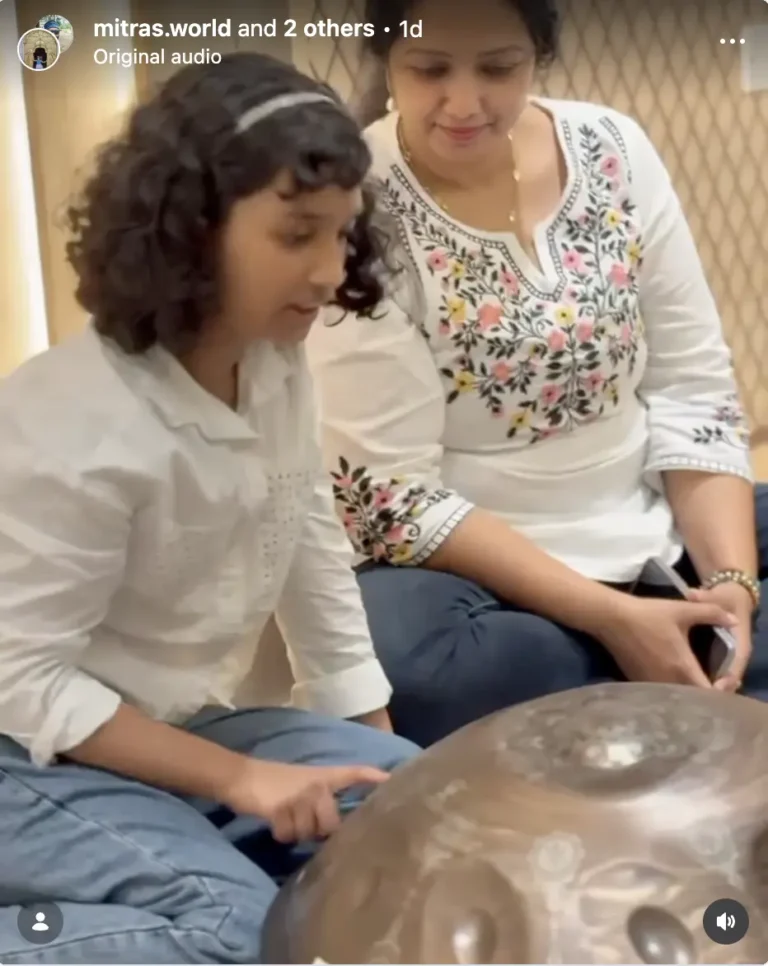
This is where the handpan has a rather unfair advantage over the guitar or a keyboard when you are introducing a child to music. A handpan is built around a particular scale. The notes are chosen to work together. So when a child who knows nothing about music starts wandering around the instrument, they aren’t constantly producing combinations that sound unpleasant.
There isn’t really a “wrong note” or bad practicing music. There can certainly be a rhythm that doesn’t work, or a sequence that isn’t bright, but the child is not punished by the instrument for simply exploring.
Children don’t particularly enjoy being told, “No, that’s wrong.” They don’t know what is wrong when we haven’t had the time or patience to sit down and explain what is wrong. They just think they should not repeat it.
Unlike with handpans, when a child explores chromatic instruments, the freedom to explore can disappear with the instrument constantly telling them that what they have played is not right yet.
"Perhaps the best first instrument is not the one that makes a child practise. It is the one that makes them forget they are practising."
I think this is perhaps the strongest reason I see children picking up and playing a handpan so quickly.
They don’t need to begin with notation. They don’t need to know what a semitone is. They don’t need to know the names of the notes. They can first learn something much more fundamental:
Listen.
Listen to what happens when you strike harder. Listen to how long a note rings. Listen to what happens when you put two notes together. Listen to a rhythm.
Remember it. Repeat it. Change it. That is music.
The theory can come later.
If the child eventually decides they want to learn piano, guitar or another instrument, they aren’t starting from nothing. They already have some sense of rhythm, melody, dynamics and the most important of all, the patience to listen. They have already discovered that music is something you do, not something you only read.
So, Is Handpan Better Than a Keyboard or Guitar?
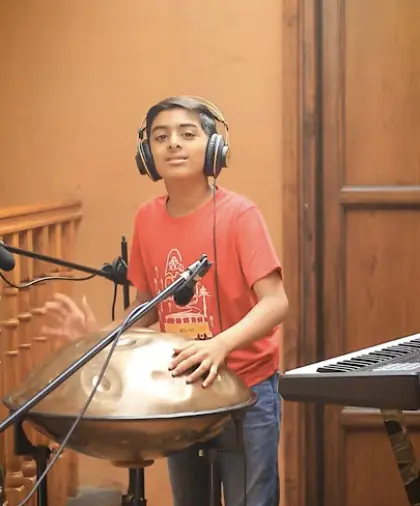
"With Handpans, parents introduce music to children before children understand what music even is."
Every instrument has something wonderful to offer a child. A piano can teach extraordinary things about harmony and musical structure. A guitar can become an instrument they carry through their entire life.
A handpan has its own particular magic. For parents of children younger than seven years, the question should not be
“Which instrument should my child learn?”
But:
“Which instrument will make my child want to play without being asked?”
That is where I have seen the biggest difference. When children come into our workshop with their parents, I rarely have to convince the children to try the handpan. They are usually already reaching for it.
Once they start, they don’t look like they are practising. They look like they have found something they want to play with. If somewhere along the way, they start correcting you while you’re trying to play theirs, well, you probably chose the right instrument.
Would you like to connect with other parents
whose children play the Handpan?
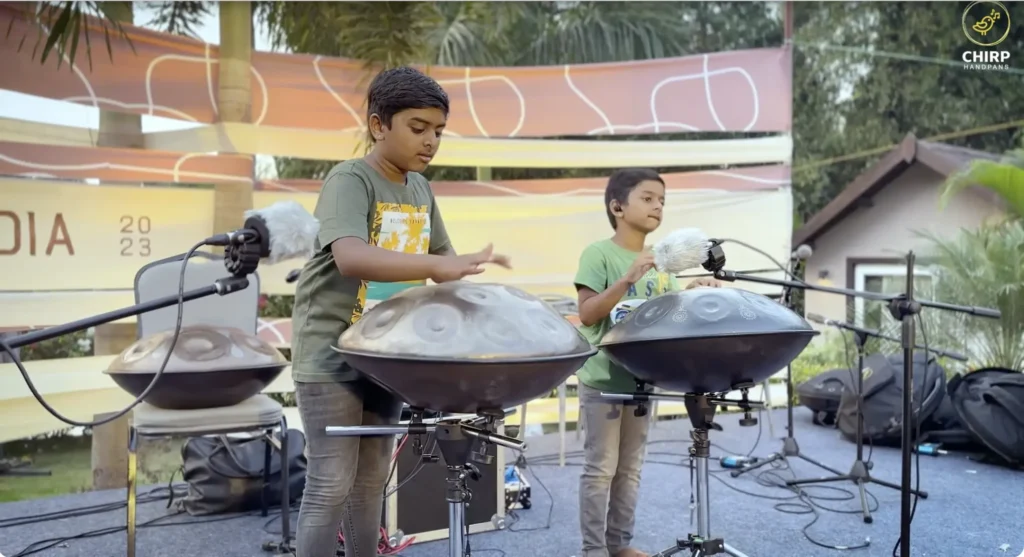
The Naadamaya Handpan Brothers are among India’s youngest handpan performers, blending the rich traditions of Carnatic music with the expressive voice of the handpan. Over the past four years, they have captivated audiences at prestigious venues including Bombay Gymkhana and Vivaan, and have performed alongside acclaimed artists such as Beat Gurus, Tabla Muthu, and keyboardist Solomon. Their repertoire spans intricate Carnatic compositions, beloved Indian film melodies, and Western classics, reflecting the remarkable versatility of the handpan.
Driven by a vision to take the handpan to the world’s finest stages, the brothers are dedicated to integrating the instrument into India’s classical traditions, orchestras, and global musical collaborations.
Talk to us to learn more about their journey with their Chirp Handpans.