
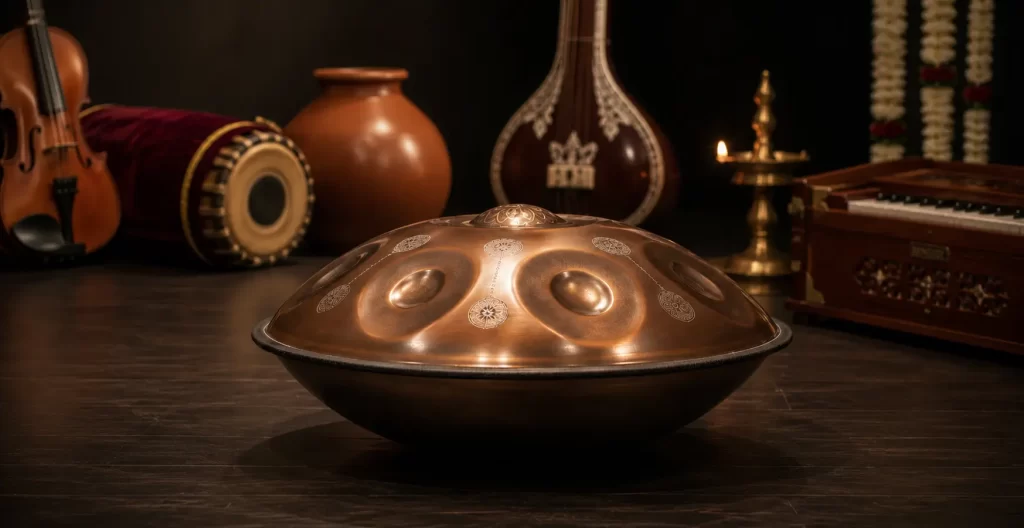
Why do handpans exist in different scales unlike a piano?
“Chromatic Handpans have never quite become the Standard, despite several makers attempting over the last 25 years”
One of the questions we hear from experienced musicians is simple:
“Why can’t you just put all the notes on a handpan, like a piano?”
“Why does every handpan scale not have all of the handpan notes?”
It is a reasonable question.
And it is one we have tried to answer ourselves — quite literally.
At Chirp, we have attempted to make a chromatic handpan at least eight times over the years. We are not the only ones. Makers around the world have experimented with ways of putting more notes, more intervals and eventually the entire chromatic scale onto a single instrument.
And yet, despite all that experimentation, chromatic handpans have never become the standard.
There is a reason.
The Problem Isn't Simply Fitting More Notes
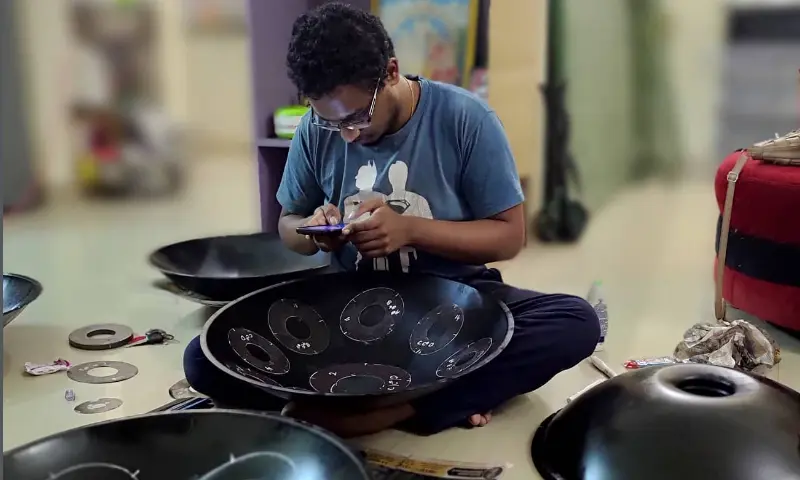
A handpan is a single resonating instrument.
Every tonefield is physically present on the same shell. The shaping processes used by good makers give enough interstitial separation to make D Kurd with 20 notes, D Aegean with 20 notes and F# Low Pygmy with 21 notes. The resonance of one note with another is a natural phenomemon in every handpan scale, no matter the number of handpan notes. Even on the best tuned pan where the maker as reduced sympathetic resonance using stretched tuning or double dimples, when you play one note, you aren’t activating an isolated key. You are exciting a piece of steel that is acoustically connected to everything around it via the resonant chamber created by the gluing of the top and bottom shell of the handpan. Notes that go well together sometime create resonance that sound good to the ears and others create dissonance.
This is part of what makes a handpan scale sound the way it does, but it also creates a problem when you try to make the instrument chromatic.
The more handpan notes there are that are only a semitone apart from one another, the more the handpan starts sounding dissonant. Only some combinations of handpan notes produce beautiful sympathetic resonance. Others produce dissonance that you didn’t intend to play.
"A chromatic handpan can contain all the right notes and still not sound right."
This can happen even when every individual note is perfectly tuned. The problem isn’t tuning the notes correctly; it is the interaction between perfectly tuned notes that are acoustically too close to one another.
That is the important distinction.
As you add more chromatic notes on any handpan scale, you also add more possible combinations. Some are musically useful. Some are deliberately dissonant. And some simply produce an unwanted beating or sympathetic response that makes the instrument feel less clean than it should.
We have spent countless hours trying different layouts and different ways of solving this. So have other makers. We haven’t yet found a chromatic handpan that makes the compromises worthwhile enough for it to become the norm.
That doesn’t mean it cannot be done. It means that the more interesting question is whether it should be.
The Handpan was never designed to be a Piano
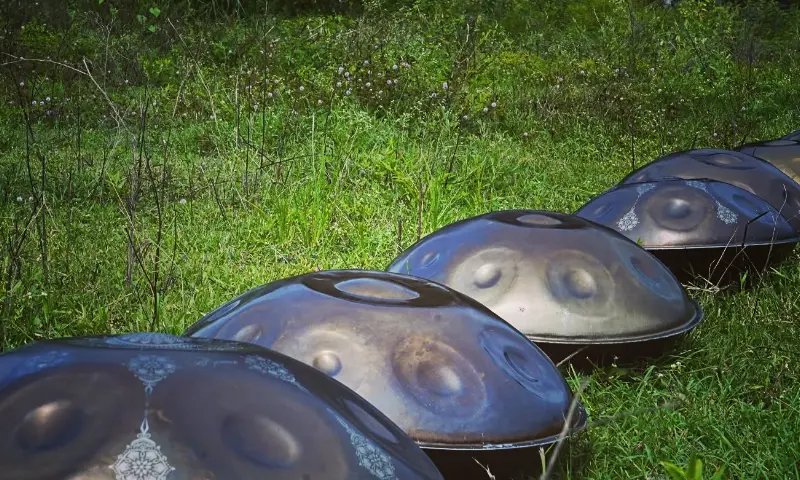
A piano gives you almost every note because it is designed to give you maximum harmonic choice.
A handpan gives you something different.
It gives you a carefully chosen musical vocabulary in which the notes are designed to work together.
That is why a well-designed 9, 10 or even a 12-note and 20 or 22 note handpan can feel far more musically expressive than a piano for the untrained artist. You aren’t constantly thinking about which notes you cannot play. You are discovering what you can do with the notes that are there.
But what if you really do want chromatic freedom?
There is a solution we have come to prefer.
Two Handpans Can Do what One Cannot
Instead of forcing every note onto one shell, you can divide the chromatic range between two instruments.
With two handpans chosen to complement each other — often with their tonal centres separated by a semitone — you can get remarkably close to the freedom of a chromatic instrument while allowing each individual handpan to retain the spacious tonefields, resonance and playability that make it a handpan in the first place.
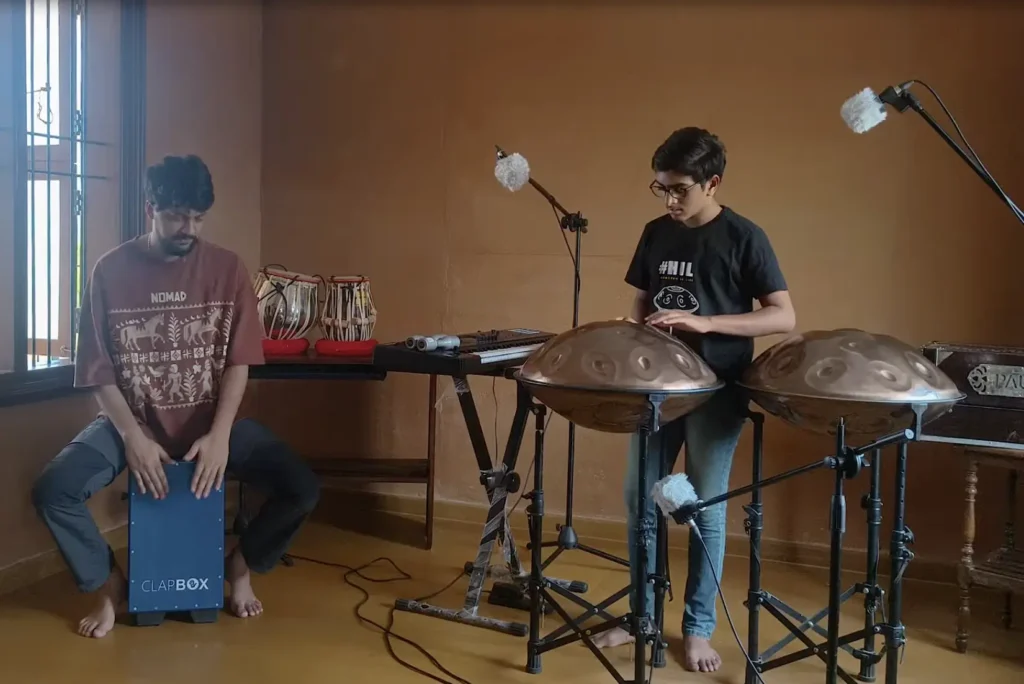
"D Kurd 22 paired with an A Major or Sindhu Bhairavi can open up a much wider harmonic vocabulary than either instrument on its own."
The second handpan isn’t there because the first one is incomplete.
It is there because two beautifully designed instruments can do more together than one instrument trying to do everything. And perhaps that is the better way to think about the handpan.
A piano gives you almost every possibility.
A handpan gives you a world worth exploring.
Looking for a Chromatic Pair?
Are you a musician or performing artist looking for the flexibility of a chromatic handpan setup?
We curate matched pairs of handpans for professional musicians and performing artists, that gives you a chromatic set of notes across 3 octaves.
Talk to us about your music, and we’ll help you find the right pair.