
What is the difference between a
$500 Handpan and $1,000 Handpan?
So you know the scale you want. You’ve even spent an evening nerd-Googling nitrided vs stainless steel, reading forums and watching videos of people comparing handpans.
Now you want to buy your first instrument. You start looking for Handpan prices across the world. There are handpans for under $500 on Amazon. There are limited handcrafted series for $1,000 and more.
They look remarkably similar in photographs. So what exactly are you paying for?
A good handpan takes a surprisingly large amount of work before it is ready to play, and that process starts much earlier than most people imagine.
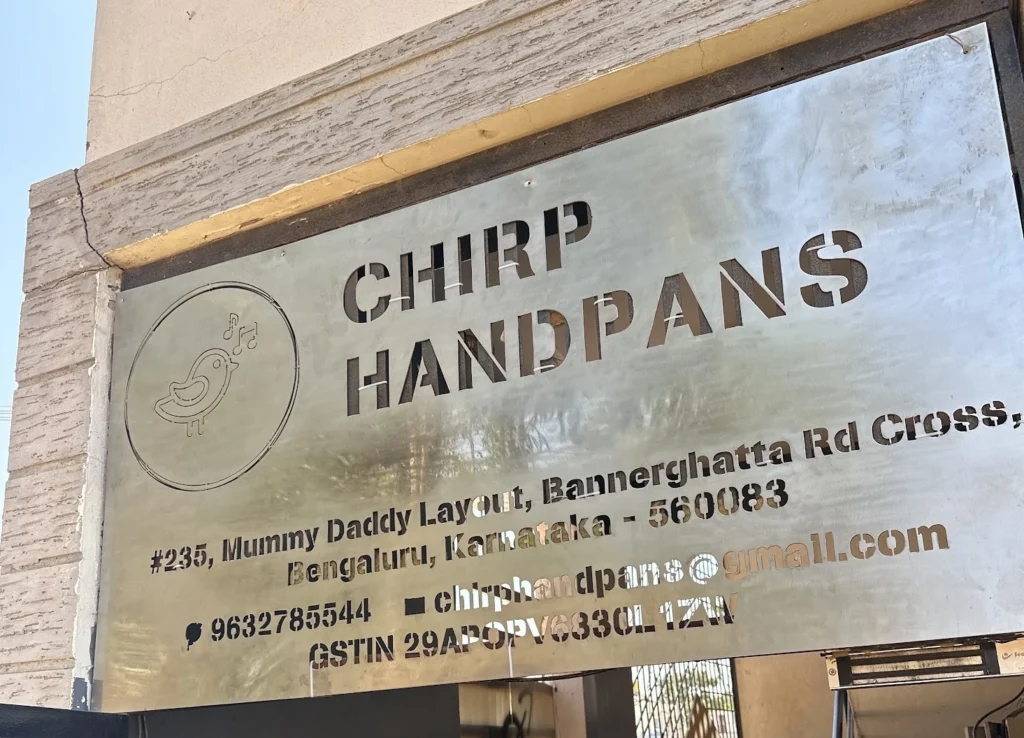
At Chirp, it takes more than 72 hours of work, tuning, stabilisation and testing to finish a handpan.
Handpan Price - It Starts With The Steel
Remember your chemistry lessons when you learnt that not all forms of steel are the same?
The chemical composition of steel changes the way it behaves.
How it stretches. How it hardens. How it responds to forming. How it holds a note. How it responds to heat treatment.
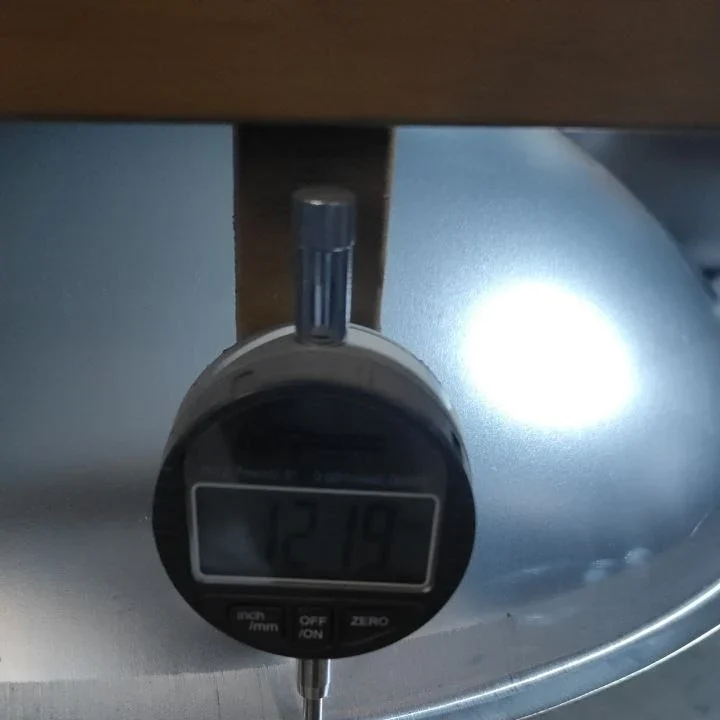
For a handpan maker, choosing the right steel is therefore not simply a matter of choosing between any two sheets in the market. The grade of the stainless steel, the direction in which the roll was stretched, the chrome-nickel composition all matters. At Chirp, we use 1.2 mm SS441 for stainless steel handpans and our own proprietary composition for nitrided mild steel. The thicker steel means your handpan stays in tune for longer.
That is where things start to get interesting and affect the handpan price. Steel doesn’t arrive at a handpan workshop in convenient quantities. It comes in tons. One ton of steel gives us roughly 80 handpans. Steel suppliers don’t generally open their doors to you because you want enough material to make ten instruments. You have to be talking about serious quantities.
Getting the steel selection wrong isn’t a small mistake. If the material doesn’t behave the way you expect, you can lose months of work.
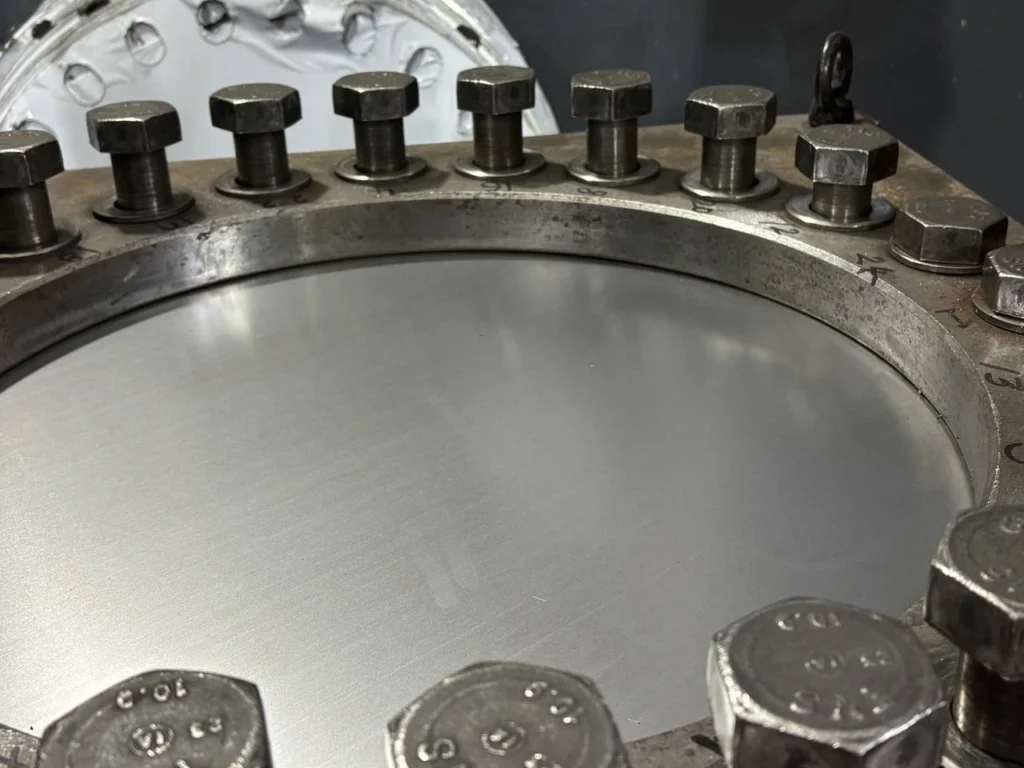
The Sheet Must now become a Shell
A handpan starts as flat steel. It has to become that familiar curved shell without compromising the material or introducing unwanted stresses.
A proper deep-drawing mould can cost upwards of $6000. The handpan price pays partly for the method adopted to make a shell from a sheet.
At Chirp, we use a modified hydroforming setup instead. We essentially blow the steel up like a balloon, forming it before cutting it into the shape of the shell. It sounds simple when you say it that way. It isn’t.
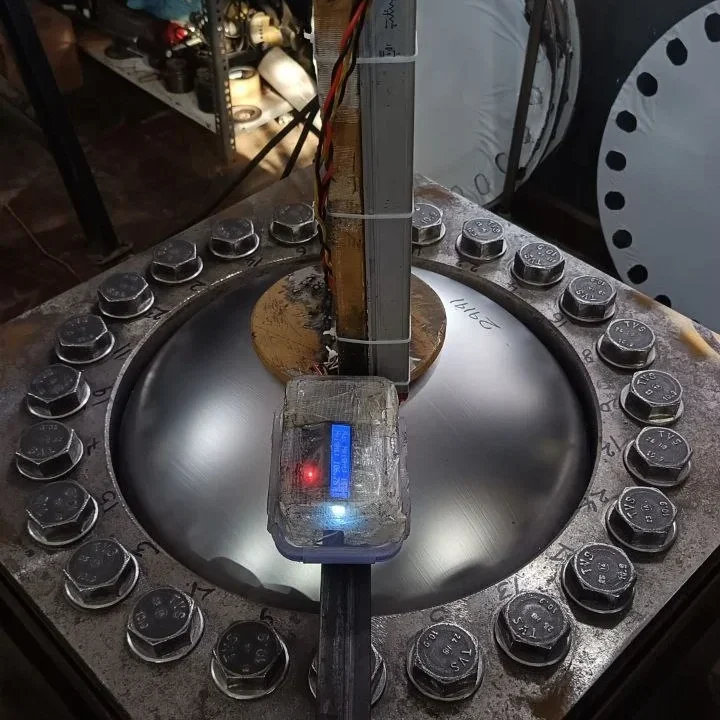
"Making handpans is an art involving core metallurgical and mechanical engineering."
The Biggest Handpan Price Differentiator
- Shaping
Once the shell is formed, we mark out the notes for the particular scale. We then dimple the shell with appropriate spaces between the notes.
Then comes one of the parts that is easy to miss when you are looking at a finished instrument –“The interstitials.”
The spaces between the notes aren’t just unworked metal. We work these areas to create tonal separation between the different notes. The metal in the interstitials is work-hardened so that the notes can behave more independently of one another. This renders the interstitials tonally dead or percussive providing a non-leaking boundary for each of the notes.
That is labour-intensive.
It is also one of the places where you can begin to hear the difference between a handpan that has been carefully made and one that has simply been stamped and tuned.
The Shaping effort spent by the maker enables them to provide warranty on their instrument and plays largely into the Handpan price.
"Take a very inexpensive handpan and play one note. If another note is getting excited when you didn't play it, you are hearing the problem. A well-made handpan should allow you to play its notes without the neighbouring tonefields constantly interfering with one another."
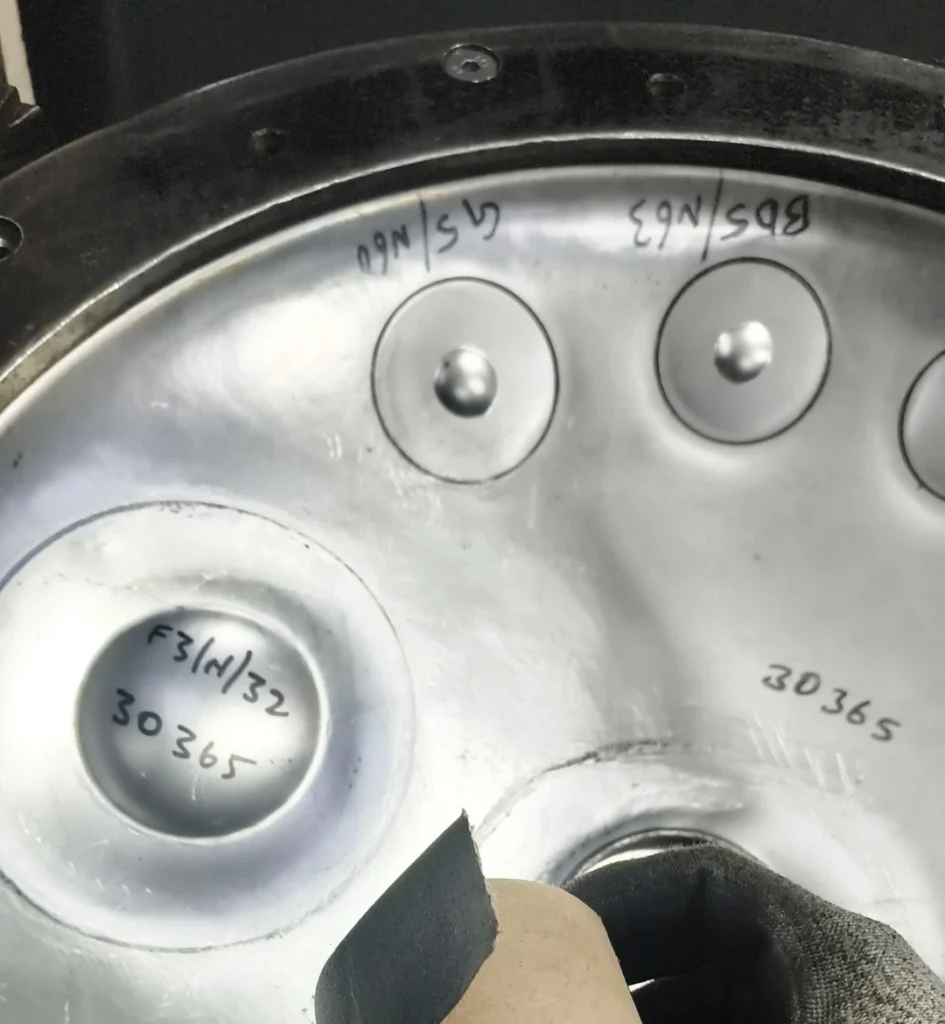
Then comes The Tuning
The first round of tuning is only the beginning. Whenever a raw shell is tuned, it needs to be heat-stabilised.
At this stage, you have an instrument that can be sold as a relatively inexpensive handpan – sufficient to fit in $500 budget but with no warranty on the sound on finish.
That is not where we stop. For the handpans we make at Chirp, there is a second and third round of tuning. In between this, the shells are heated to achieve our vintage bronze or golden-brown finish. And then it is tuned again. Only after that do we glue the two shells together. Once the glue has cured, there are two more rounds of tuning, along with a stability test and colour protection.
That is how you get to a handpan that can stay in tune for years together. To justify the handpan price, the sound sculpture has to have gone through at least 72 hours of work for it to become a musical instrument of good quality.
"While talking about the handpan price, the difference between a $500 handpan and a $1,000 handpan is how much work happens between the first shaping and the finished instrument."
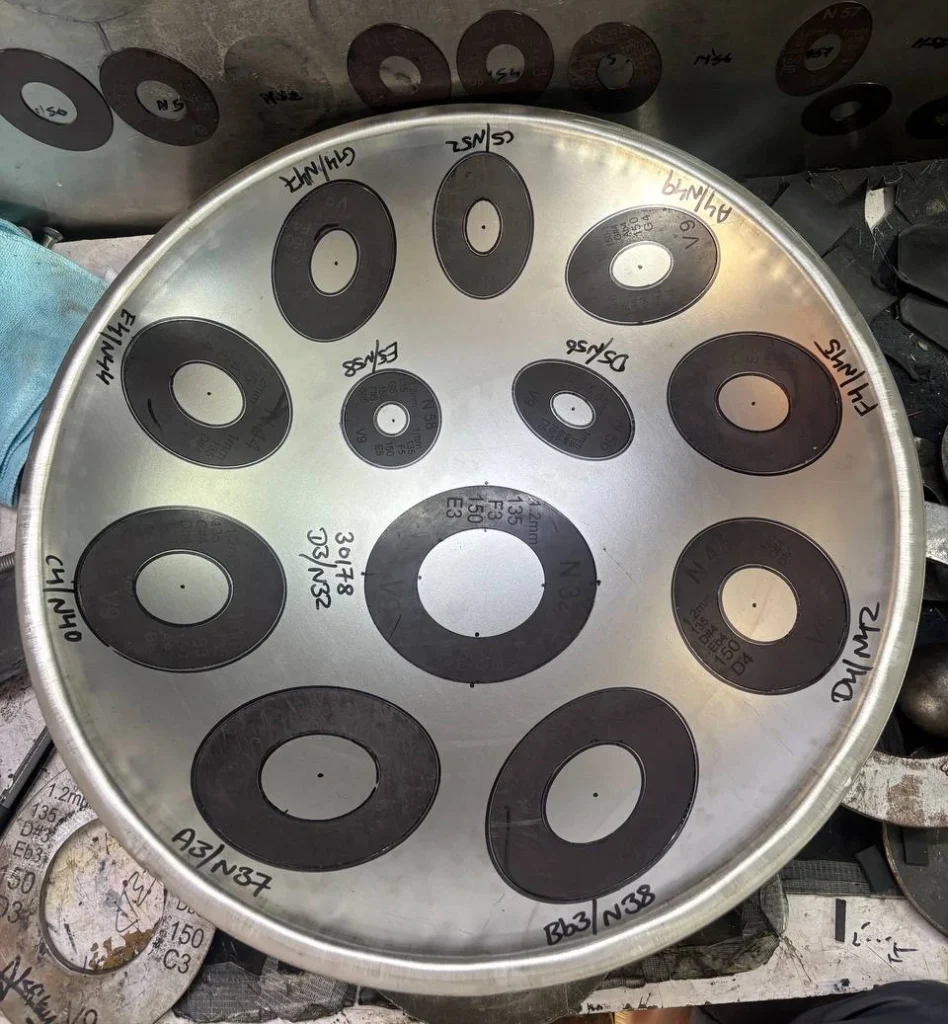
$500 Handpan
Very inexpensive/mass-produced instruments; quality and tuning can vary significantly
$1,000 Handpan
Quality handcrafted instruments with interstitial shaping from established makers
$1,800+ Handpan
Premium instruments, advanced builds, customisation and higher note counts
Besides the Handpan Price,
What should you Ask a Maker?
You don’t need hundreds of hours on googling handpan making to understand the difference between two instruments. Once you know how much happens between a sheet of steel and a finished handpan, you can start asking better questions.
How thick is the steel? How well are the notes isolated? How is the instrument protected? Is there any tuning warranty? What happens when it needs tuning five years from now?
We’ve put together a separate guide covering the 5 questions we believe every buyer should ask before purchasing a handpan.
Read: What To Ask While Buying a Handpan →
The price is only one part of the decision. You also need to know what you’re getting for it.
Beyond Handpan Price.
Buying an Instrument You Understand.

There is nothing wrong with having a budget. There are inexpensive handpans that can be a perfectly reasonable way to discover whether you enjoy playing the instrument.
However, if you’re comparing two handpans and wondering why one costs twice as much, don’t compare only the number on the price tag. Ask what happened to the steel before it became an instrument. Ask how the shell was formed. Ask what was done between the notes. Ask how many times it was tuned. Ask how it was stabilised.
Ask what happens after you take it home.
When you buy a handpan, you’re not just buying the shape, the scale or the colour.
You are buying all the work that went into making those things stay together as an instrument.
Do you want to understand the Chirp Handpan price?
Tell us what scale you’re considering, what kind of music you want to play, and your budget. We’ll help you understand what to look for.