
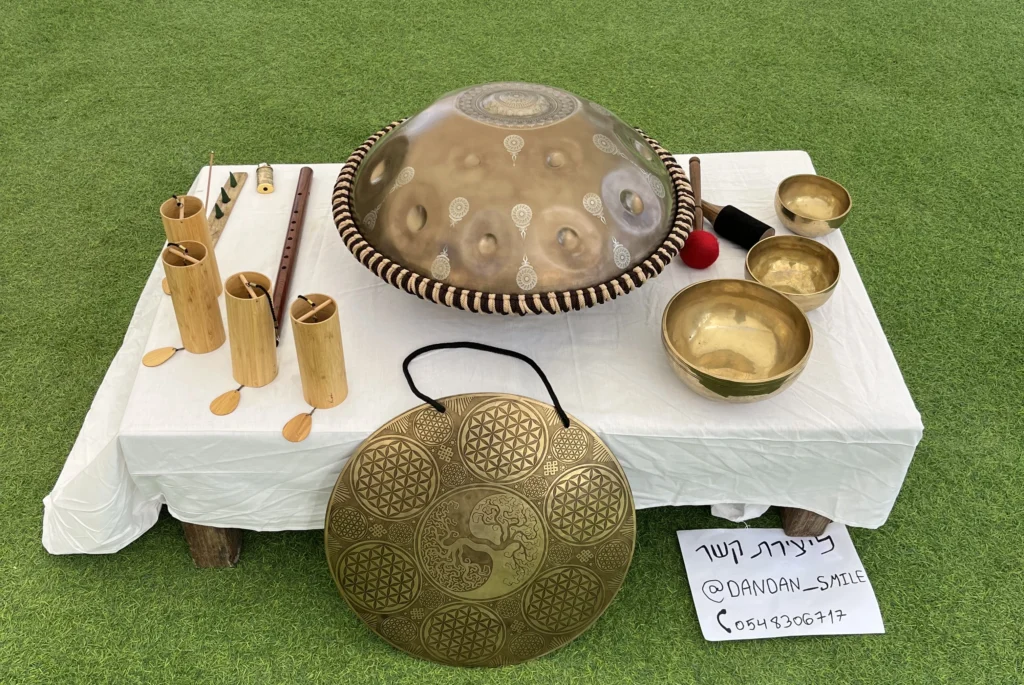
Handpan - The Queen of Sound Healing Instruments
Sound healing is hardly a new idea. Long before the handpan, people were using rhythm, resonance and vibration as part of meditation, ritual and healing. Some of the oldest musical traditions began with remarkably simple instruments — including the ghatam, a clay pot that has been played in India for centuries, and other metal percussion traditions that eventually influenced instruments such as the steel pan.
The handpan belongs to this much older family of instruments. It brings together the resonance of metal percussion with carefully tuned musical notes, but keeps the interaction wonderfully direct: the hands are the instrument’s interface.
For a sound healer, that matters.
You can shape a note with the lightest touch, let it ring, bring another note into it, or create a gentle rhythm without breaking the stillness of the room. There is no need for a complex technique before the instrument begins to speak.
And unlike many percussion instruments, the handpan gives the healer melody as well as resonance.
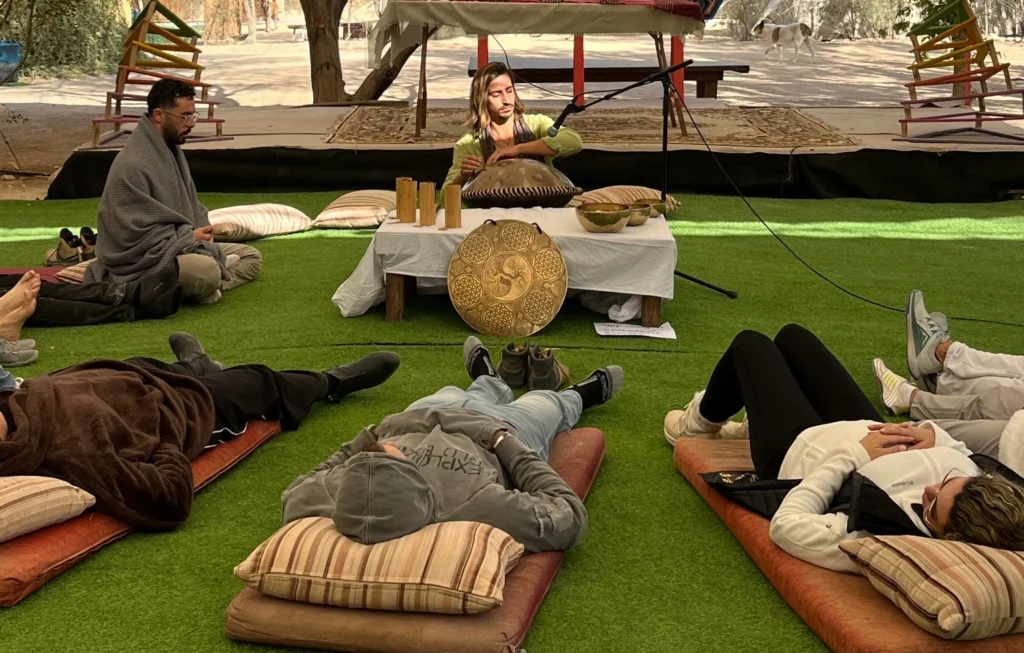
That is what makes it so powerful in a sound-healing setting. It can sit alongside singing bowls, gongs, chimes and other instruments, while also giving the session something distinctly musical — a sequence of notes, a mood, and a sense of movement.
The handpan isn’t a replacement for the ancient instruments of sound healing. It is a beautiful modern addition to that tradition.
Start With the Scale
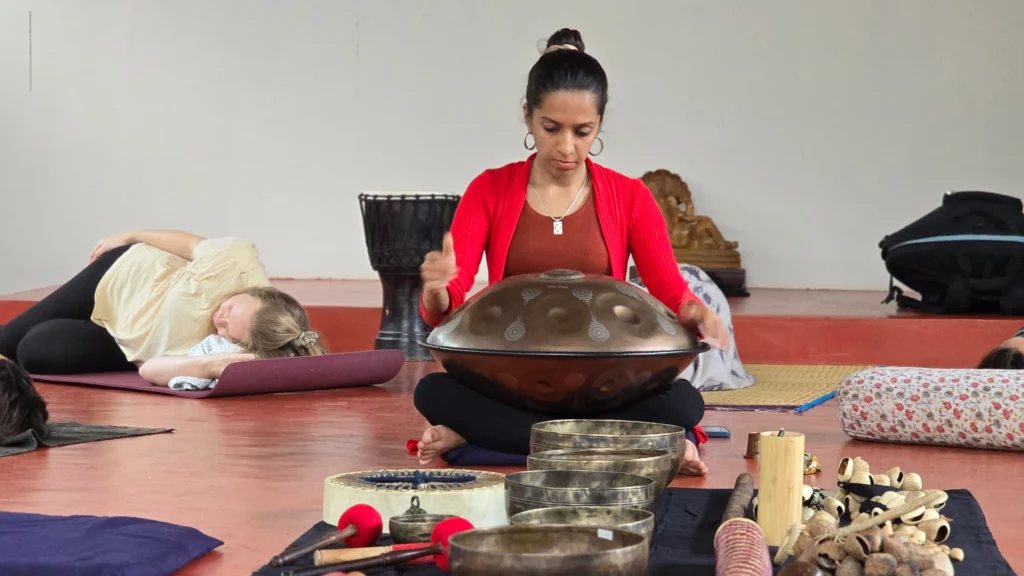
For a professional sound healer, the scale is more important than the number of notes.
We generally recommend three families of handpans for practitioners, depending on what they want the instrument to do.
D Celtic Minor — Happy
Our D Celtic Minor 9-note is one of the most approachable choices for sound healing.
It has a naturally uplifting, flowing quality. It works beautifully when the session needs to feel gentle and positive, while still giving the practitioner enough melodic possibilities to move beyond simple repetition.
It is also an excellent choice for someone who wants their handpan to be useful outside sound healing — for meditation, personal practice and simply playing music.
D Kurd — Versatile
If you want one handpan that can do everything, D Kurd 10 or 12 is a particularly strong choice.
There is enough range to create more developed melodies, while retaining the spacious, intuitive character that makes the handpan so accessible.
For practitioners who also play with other musicians, teach or perform, this is often the more versatile option.
D Hijaz — Deep and Expressive
Our D Hijaz 9, D Hijaz 12 and our masterpiece G Hijaz 18 take the instrument in another direction. Its character is more intense and expressive, making it particularly interesting when the practitioner wants to create a deeper, more immersive atmosphere.
The choice isn’t about which scale is “best”. It is about what you want the instrument to help you evoke.
The Handpan Responds to Your Touch
This is where the handpan becomes particularly interesting for sound healing.
The same note can be played softly, firmly, with the fingertips, with different parts of the hand, or as part of a rhythmic pattern.
The instrument responds to the player.
That makes it possible to shape the energy of a session without reaching for another instrument.
A gentle touch can leave a note floating.
A stronger strike can bring it forward.
And between the two is an enormous range of expression.
Sustain Matters
For sound healing, sustain isn’t just a pleasant feature. It is part of the instrument’s voice.
A note that continues to bloom after you have played it gives the practitioner time to let one sound dissolve before introducing another. When several notes overlap naturally, the handpan creates a continuous bed of sound without requiring constant playing.
This is where the quality of the instrument becomes especially important. Our handpans are made from stainless steel, chosen for their long sustain, balanced resonance and full-bodied sound. The notes are designed to complement one another, allowing the instrument to remain rich and present even when played gently.
Two handpans can have the same scale and the same number of notes and still feel completely different under your hands. For a sound healer, that difference is not subtle — it becomes part of the experience you create for every person in the room.
Choosing Your First Professional Handpan
If you’re moving from simply enjoying the handpan to using it professionally, we’d recommend spending less time looking at specifications and more time actually playing instruments.
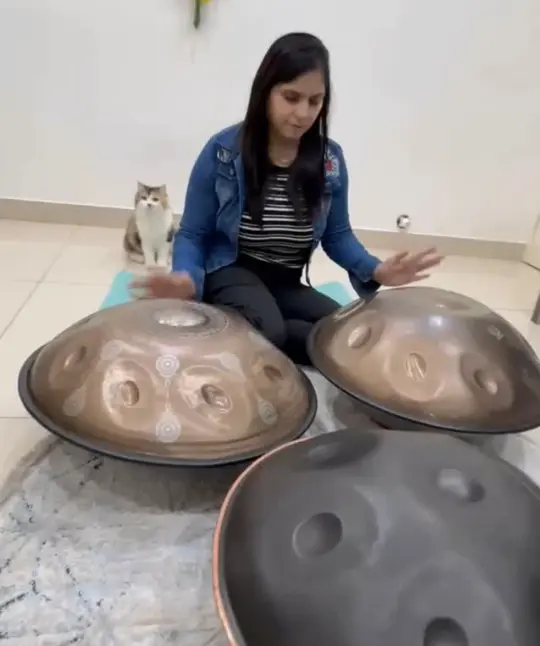
Try the different scales. Play the notes softly. Listen to the notes resonate long. Try creating the kind of sequences you would use during a session.
432 Hz or 440 Hz?
This is something we are asked about regularly by sound healers.
We can make customized 432 Hz handpans for practitioners who specifically want to work at that pitch.
Our recommendation is simple: choose 432 Hz if your existing sound-healing instruments are also tuned to 432 Hz.
If your bowls, other melodic instruments or instruments used for musical collaboration are tuned to 432 Hz, a 432 Hz handpan can fit naturally into your practice.
But if your other instruments are at 440 Hz, we generally recommend staying with 440 Hz.
The difference matters when instruments are played together. A handpan tuned to 432 Hz may sound beautiful on its own, but trying to jam with instruments tuned to 440 Hz can make the combination difficult.
Don’t choose 432 Hz because it is supposed to be better. Choose it because it belongs with the sound world you have already created.
Looking for a handpan for sound healing?
Tell us about the sound healing instruments you already use, the kind of sessions you conduct and the scales you are drawn to.
We can help you choose between D Celtic Minor, D Kurd, D/G Hijaz or other scales and we also make custom 432 Hz handpans for sound healers whose existing instruments are tuned to 432 Hz.